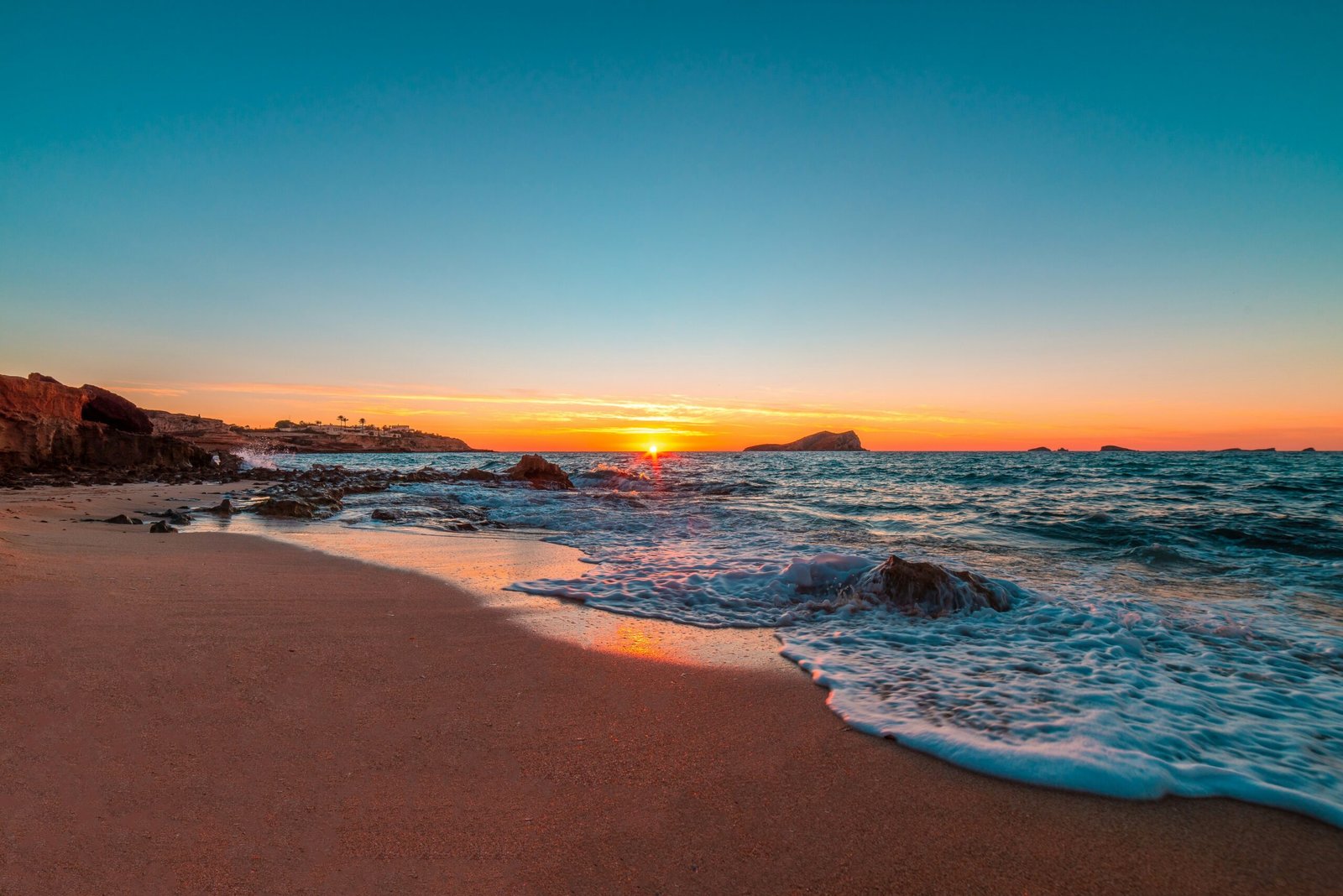
The Ultimate Guide to Ibiza
The Ultimate Guide to Ibiza
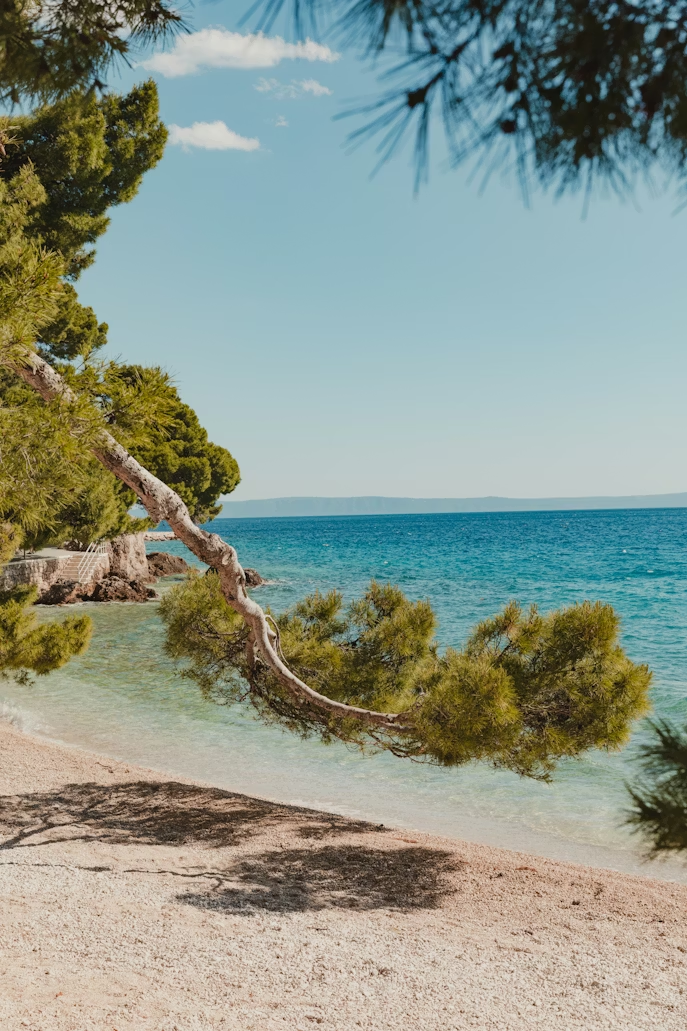
Ibiza has 56 beaches. Most visitors see three. They pick a spot near their hotel, lie down, and call it a day — and they miss everything.
The island's coastline is one of the most varied in the Mediterranean: wild north-coast cliffs battered by the tramontane wind, turquoise coves so clear the bottom looks painted, long sandy arcs built for entire days of doing nothing, and a handful of hidden beaches you genuinely cannot reach unless you arrive by boat. Each one is different. Each one is worth knowing.
This is not a list of the most popular beaches in Ibiza. It is a list of the right ones — chosen for water quality, setting, what time of day to go, and what you should actually do when you get there.
| Beach | Best For | Vibe | Don't Miss |
|---|---|---|---|
| Cala d'Hort | Es Vedrà views · Eclipse 2026 | Wild, spiritual | Sunset from the water |
| Ses Salines | The full Ibiza experience | Stylish, social | Flamingos at dusk |
| Cala Comte | Best sunset on the island | Laid-back luxury | The rocks at golden hour |
| Cala Jondal | Blue Marlin crowd, good food | Upscale, see-and-be-seen | Paella at the water's edge |
| Cala Bassa | Families · pine-backed calm | Relaxed, beautiful | The pine forest at noon |
| Aguas Blancas | Wild swimming · solitude | Raw, naturist-friendly | The cliffs at low tide |
| Cala Mastella | Authentic Ibiza · total quiet | Tiny, local, timeless | Lunch at El Bigotes |
| Playa d'en Bossa | Party beach · long walks | High energy, crowd | Sunrise walk at 6am |
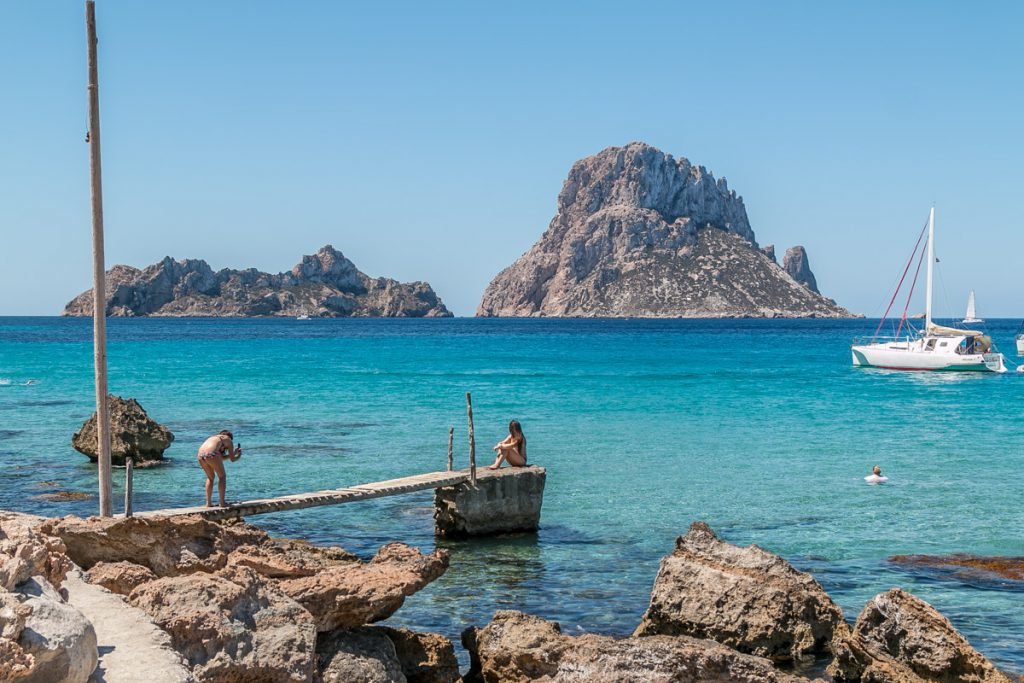
There is a rock in the sea off the southwest coast of Ibiza called Es Vedrà. It rises 413 meters straight out of the water, it has never been inhabited, and there are more reported UFO sightings here than almost anywhere on earth. From Cala d'Hort beach, it sits directly in front of you, close enough to feel its presence, far enough to be genuinely otherworldly.
Cala d'Hort is not the most comfortable beach on the island. The sand gives way to pebbles, the road in is narrow, and parking fills up fast in July and August. None of this matters. You come here for the view, the energy, and the water — which is among the clearest anywhere in Ibiza, thanks to the Posidonia seagrass meadows growing beneath the surface.
The restaurants here — particularly Es Boldado, perched on the cliff above — serve some of the best seafood on the island. Book ahead.
Cala d'Hort is the top-recommended viewing spot for the total solar eclipse on August 12, 2026. The beach faces southwest — directly toward the path of totality — with Es Vedrà as the backdrop. 76 seconds of darkness, with that silhouette on the horizon. There is nowhere else on earth to watch this eclipse. See the full eclipse guide →
Arrive before 10am or after 5pm in high season. The road narrows sharply on the descent — if you rent a boat and anchor offshore, you'll have the best view of the beach and Es Vedrà without the parking chaos.
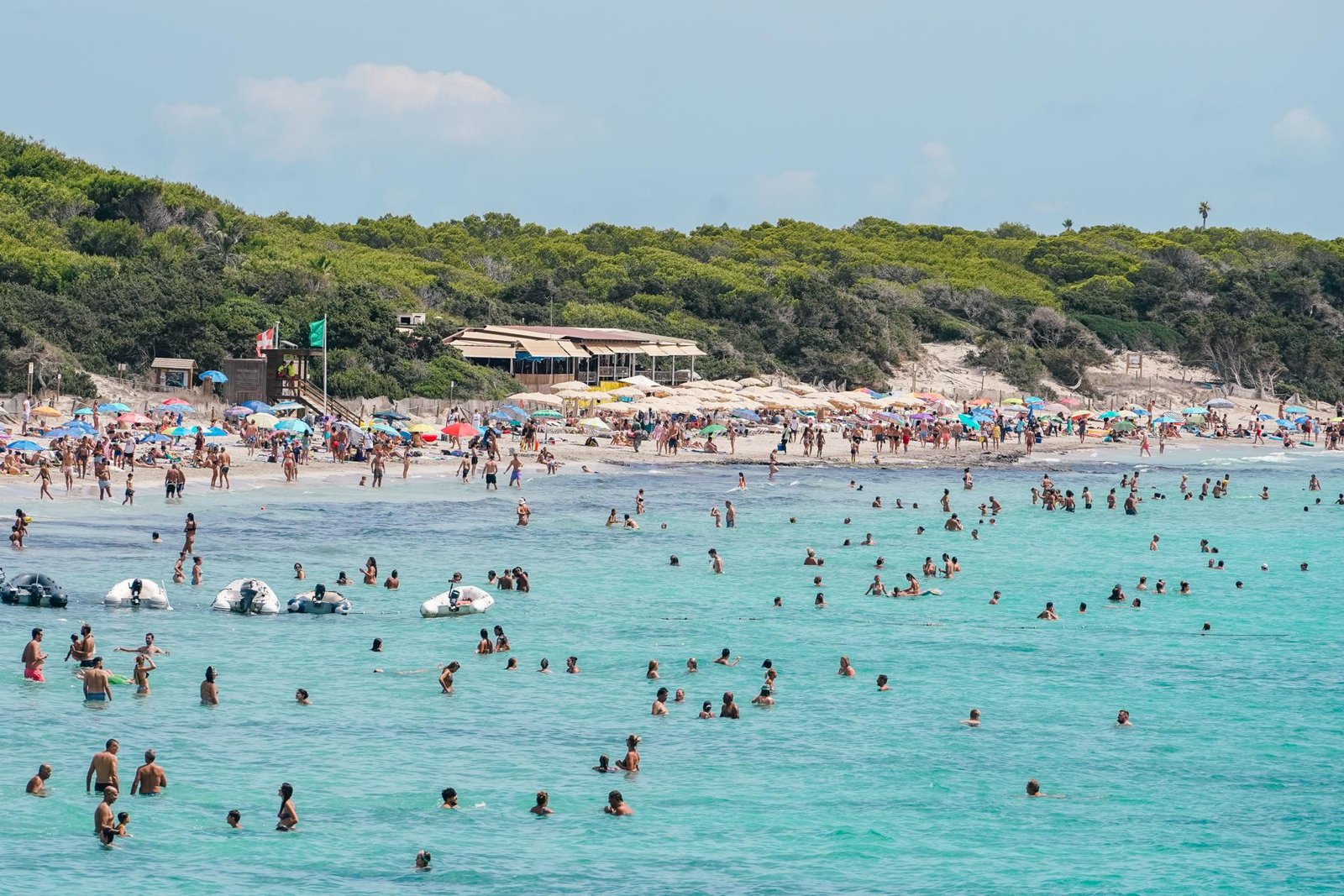
Ses Salines is protected by natural park status on both the Ibiza and Formentera sides, which means no development, no concessions beyond the beach bars, and water that earns a Blue Flag every single year. The sand is fine and pale. The water is the specific shade of turquoise that makes people question whether a photo has been filtered.
The beach sits between the salt flats — where flamingos nest and feed in season — and the sea. At the right hour, in late afternoon, you can watch flamingos in the water behind you and speedboats in front. It is, without exaggeration, one of the most visually striking spots in Europe.
The beach bars here (Jockey Club and Sa Trinxa) are Ibiza institutions. Sa Trinxa in particular runs a sound system all day and draws a crowd that is — even by Ibiza standards — exceptionally good-looking.
The first hour after sunrise is miraculous here. The light on the water, the salt flats, the silence. Almost no one is there. Walk the full length of the beach before the bars open and you'll understand why people become obsessed with this island.
Cala Comte — officially Cala Conta — is not one beach but a series of small rocky coves along the west coast, each slightly different in character, linked by paths through low scrub. The water is shallow, crystalline, and layered in improbable shades of blue and green. The rocks frame it perfectly.
What sets Cala Comte apart is what happens at 8pm. The sun drops toward Formentera on the horizon — you can see the island clearly on calm days — and the light turns everything gold. The rocks, the water, the faces of everyone sitting on the shore. Ibiza sunsets have a reputation. At Cala Comte, the reputation is deserved.
Get there by 6pm if you want a spot on the rocks. The parking situation is a genuine challenge in summer; arriving by boat is not just more relaxed, it gives you an entirely different perspective on the coves from the water.
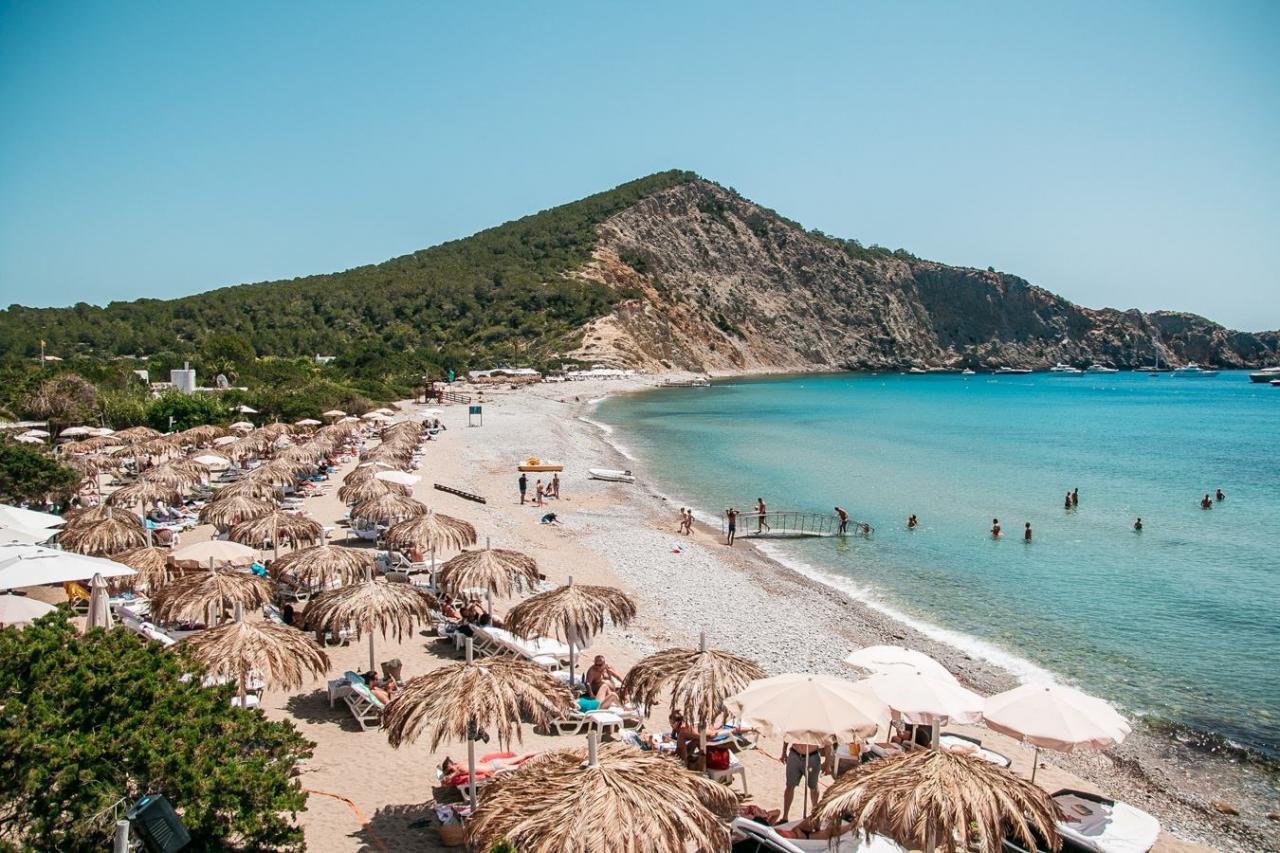
Cala Jondal is a pebble beach — no sand. You'll need water shoes unless you're used to rocky coastlines. And yet, every summer, it fills with some of the wealthiest and most stylish people on the island, because Blue Marlin Ibiza is here, and because the beach has an energy that the sandier, more accessible spots simply don't have.
Blue Marlin is a beach club and an institution: the place in Ibiza to eat paella, drink Whispering Angel, and listen to sets from world-class DJs starting at noon. Sunbeds need to be reserved. The food is excellent and genuinely expensive.
Beyond Blue Marlin, Cala Jondal has quieter options — smaller chiringuitos and a few stretches of public beach where you can lay out without a reservation. The water is deep, blue, and consistently calm.
The most dramatic approach is by sea: anchor 100 meters offshore, swim in, and walk up from the water. Several yachts anchor here on any given day in August.
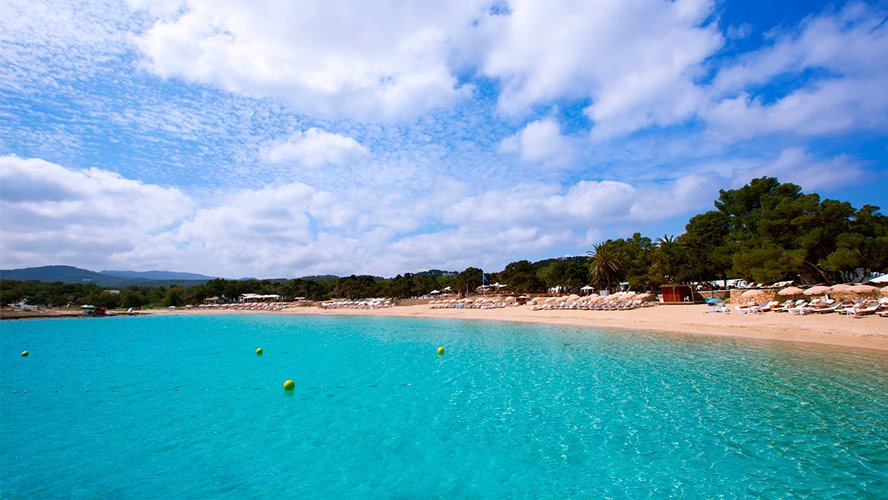
Cala Bassa is sheltered, shallow at the edges, and backed by Aleppo pines that provide shade no beach umbrella can match. The combination of fine white sand, shallow turquoise water, and the scent of pine on a warm afternoon creates something close to perfection — which is why it draws a range of visitors wider than almost any other beach in Ibiza.
Families with young children come because the water is safe and gentle. The Cala Bassa Beach Club brings a more sophisticated crowd from midday onward. Both coexist happily. The beach is wide enough to accommodate everyone without feeling crowded, except during the peak of August.
A water taxi runs between Cala Bassa and Sant Antoni in summer — a 20-minute crossing that makes it accessible without a car.
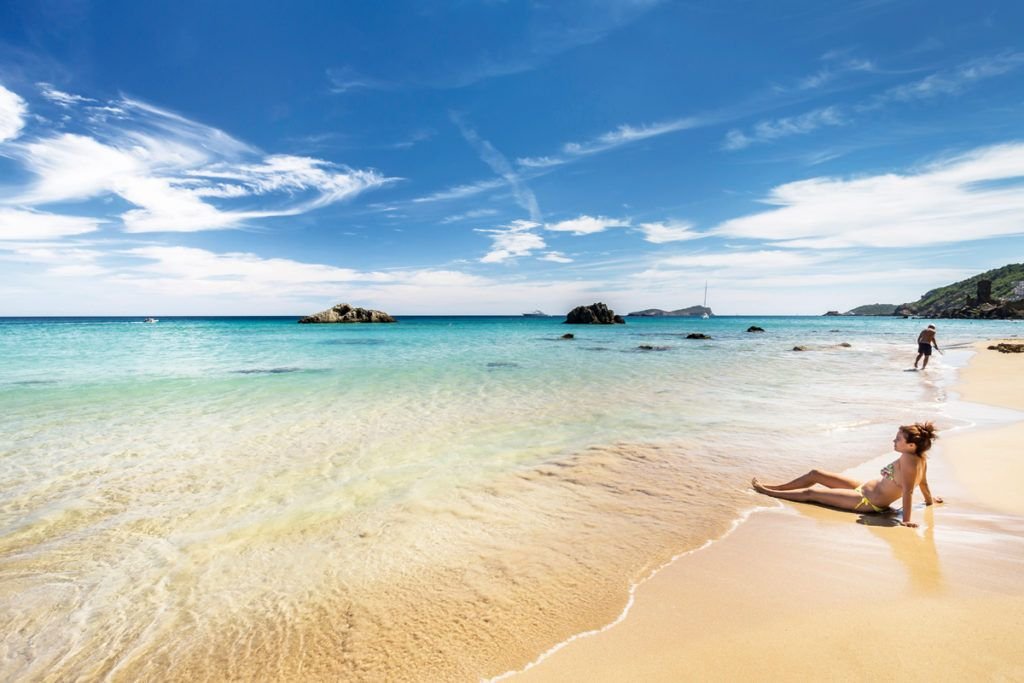
The north of Ibiza is a different island. The hills are steeper, the roads narrower, the landscape — rugged, scented with rosemary and wild herbs — feels genuinely untouched. Aguas Blancas is the north coast in concentrated form: a wide, isolated beach flanked by dramatic ochre and white cliffs, facing open sea, with no beach bar, no parking attendant, and no pretense.
The water can be rough when the tramontane blows from the north — but on calm days it is a natural swimming pool of improbable clarity. The beach is clothing-optional and has been for decades; this is simply understood and unremarkable. Bring everything you need: water, food, sun protection. There is nothing for sale here.
The walk down from the car park takes about ten minutes and winds through terraced land with views that reward the effort on their own.
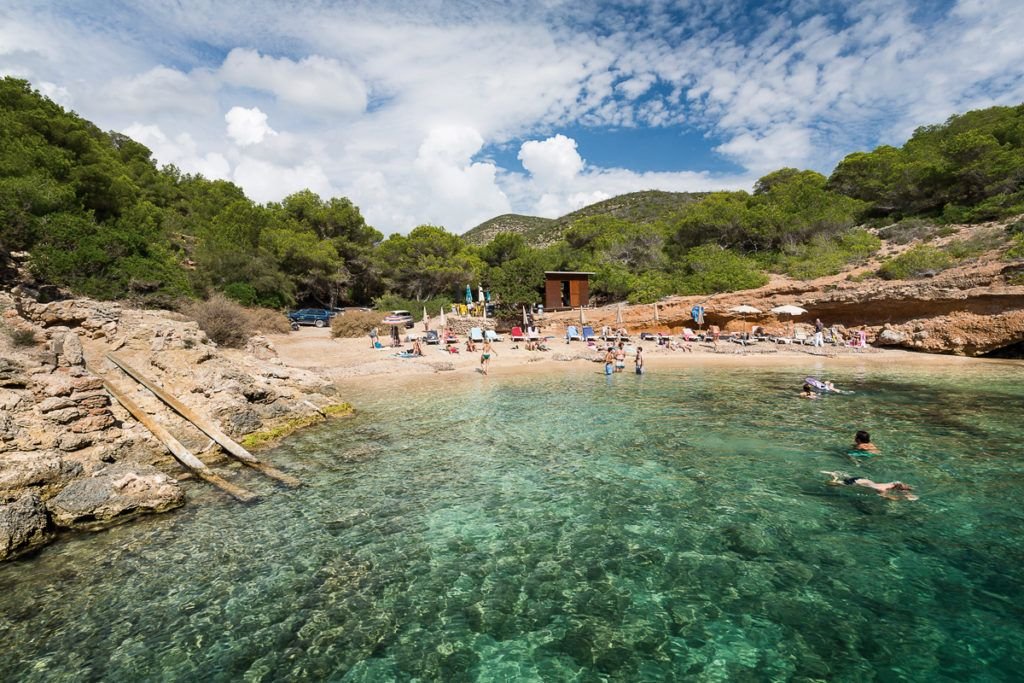
Cala Mastella holds perhaps 40 people comfortably. It is reached by a path through pine forest, the beach is a small crescent of sand beside a stone jetty, and the sea is completely calm and utterly clear — the kind of clear that makes snorkelling feel unnecessary, because you can see everything from the surface.
What makes Cala Mastella unmissable is El Bigotes — a restaurant built on the jetty that serves a single dish: a fish and shellfish stew made from whatever came off the boats that morning, cooked in the same ceramic pot, eaten at wooden tables with your feet practically in the water. Reservations are extremely limited and difficult to secure. Start trying early.
This is Ibiza before it became famous. It is still here. Not many places like this are left.
Park at the upper car park — the final stretch to Cala Mastella is an unpaved track that most hire cars can't handle. El Bigotes is cash only.
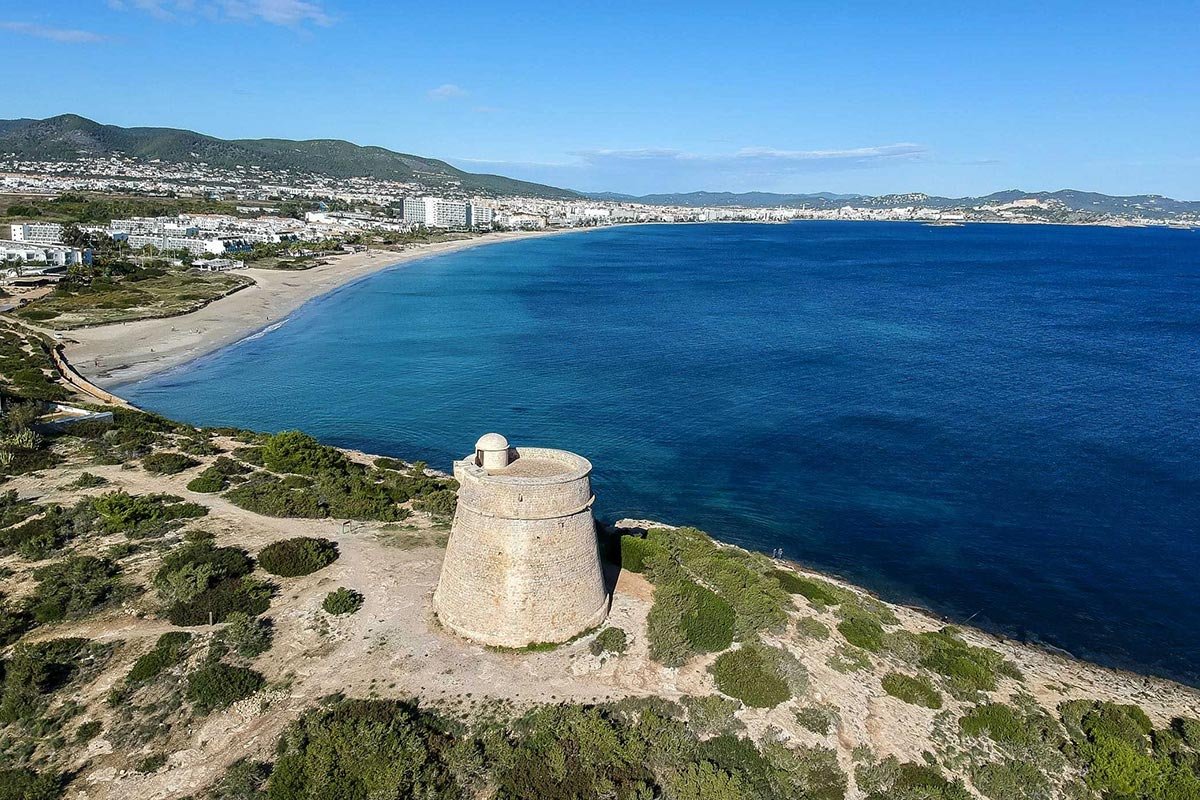
Playa d'en Bossa is where Ushuaïa is. Where Hi Ibiza is. Where the party scene that the island is famous for meets a three-kilometer stretch of south-facing sandy beach with calm, warm, shallow water. If you came to Ibiza for that version of Ibiza, this is your beach, and it delivers completely.
Away from the beach clubs, Playa d'en Bossa is also simply a great beach: wide, clean, easy to access, with consistent water quality and the full weight of the island's sun from morning until evening. It is not peaceful. But it has an energy that is impossible not to respond to.
The best time to walk Playa d'en Bossa is before 8am, when the club crowd has just left for their hotels and the beach is empty. The sea is still warm, the light is low, and the sand is unbroken. It is genuinely one of the most beautiful times you can spend on this island.
August 12, 2026 — a total solar eclipse passes directly over Ibiza. Cala d'Hort will be the most extraordinary place on earth to watch it. Plan your trip around the eclipse, and you'll discover the rest of the island along the way.
The Eclipse Guide Plan My Trip